Twelve Châteaux Within an Hour of Mialet
Mialet sits in a part of France that is unusually well supplied with castles, and most people have no idea until they get here. Within an hour of the door of Beaux Souvenirs there are twelve châteaux worth a day of anyone's time, and not one of them will have you queueing behind a coach party.
If you are picturing a château holiday in France, you are probably picturing the Loire, and fairly enough. We are not going to pretend these are Chambord and Chenonceau. But the coach tours that come to the Dordogne go south, to Sarlat and the river villages, and they do not come up here. Nobody moves you along; there are no timed entry slots, and at several of these the person showing you the rooms is the person who lives in them.
The contrasts are the point. This was border country for centuries, between the Limousin and the Périgord, between the French crown and the English one, and borders meant fortresses. There are many more scattered across the area than any one list could hold; these twelve are the ones we send guests to. One is a ruin where volunteers pitch a medieval camp. One is stuffed with contemporary art. One is a family home the owners show you round themselves. They are listed below in order of distance, not ranked, because the drive matters more than our opinion of which is finest. Most guests manage two or three in a week and give the rest of the time to markets, long lunches and the pool, so treat this as a menu, not a list to get through.
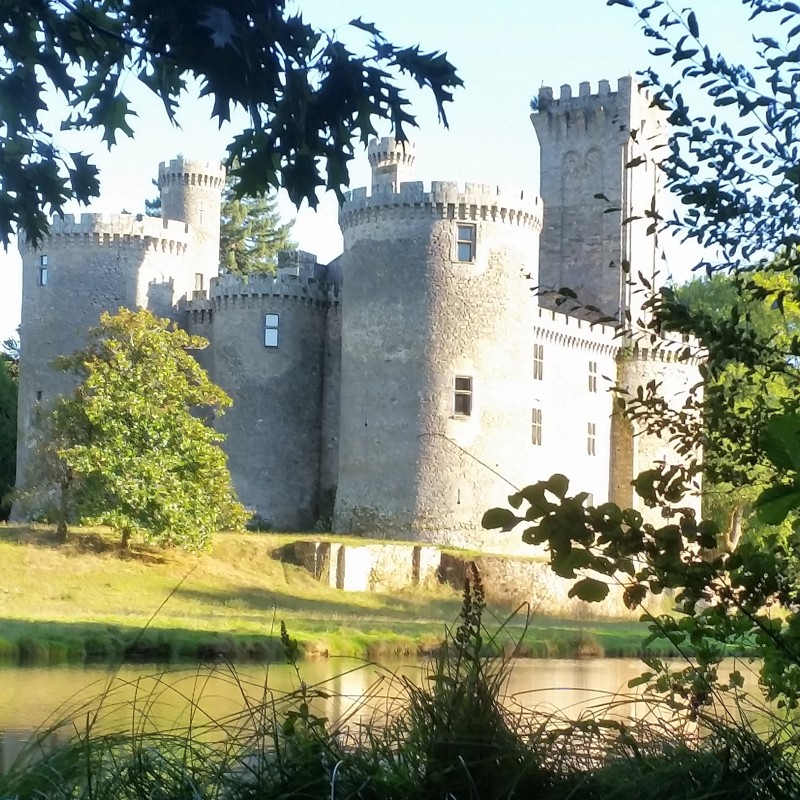
Château de Montbrun: One for the Photographers
Distance: about 15 minutes, at Dournazac in the Haute-Vienne
How long to allow: about half an hour
Don't miss: the reflection in the lake, best early with mist on the water
Watch out for: you cannot go in. Private house, and access changes with each owner
In all our years here we have never once been inside, and it earns its place on this list purely for where it stands. The castle stands with its feet in a lake that does the work of a moat and hands the whole building back as a reflection: four squat round towers with jagged tops, a tall square keep. The keep went up in 1179; the heavy round towers came with the fifteenth-century rebuild.
So it is a stop, not a day out, improved considerably by the tavern across the road. One correction, since you may run into it: various sites claim Richard the Lionheart died here. He did not. That was Châlus-Chabrol, just up the road.
Château de Châlus-Chabrol: Where Richard the Lionheart Met His End
Distance: about 15 minutes, at Châlus in the Haute-Vienne
How long to allow: forty-five minutes
Don't miss: the guard room fireplace, the chapel, and the view from the keep
Watch out for: this is a partly ruined castle, not a furnished showpiece
Current times: chateau-chaluschabrol.e-monsite.com
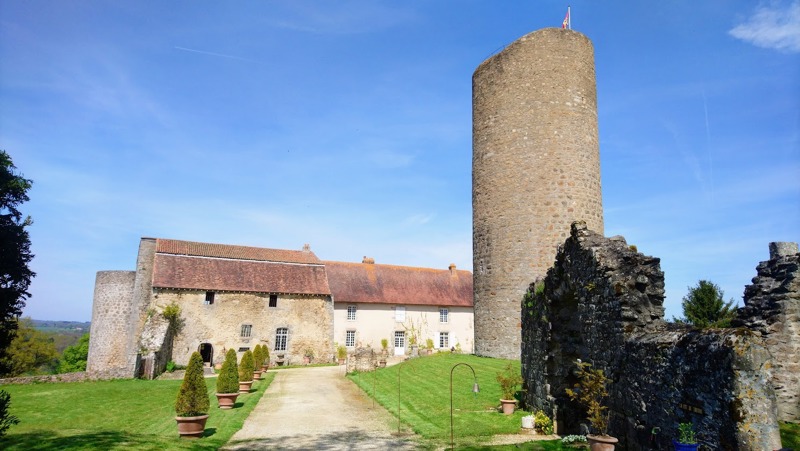
This is the one with the story, and for British visitors it is a strange thing to stand in. In March 1199 Richard the Lionheart was besieging Châlus-Chabrol when a crossbow bolt caught him in the shoulder. The wound turned bad, and he died on 6 April at the foot of the great fireplace in the guard room, with his mother Eleanor of Aquitaine at his side. His entrails were buried in the castle chapel and are there still.
It was the first in a chain of fifteen castles defending Limoges, which is why it mattered enough to be besieged four times. What remains is the circular twelfth-century keep, the shell of the chapel, a good introductory film, a small museum on the local chestnut woodcutters, and a view from the keep that goes a long way.
Château de Jumilhac: Gold, Gardens and Candlelit Summer Evenings
Distance: about 22 minutes
How long to allow: two hours, or a whole evening in high summer
Don't miss: the roofline, the Spinner's room, and the view from the Chapeau du Marquis
Handy: there is a restaurant right outside the gate, and a tea room inside
Watch out for: the candlelit evenings, Tuesdays year-round and Thursdays too in July and August, need booking. Take a cardigan; the stone holds the cold
Current times: chateaudejumilhac.com
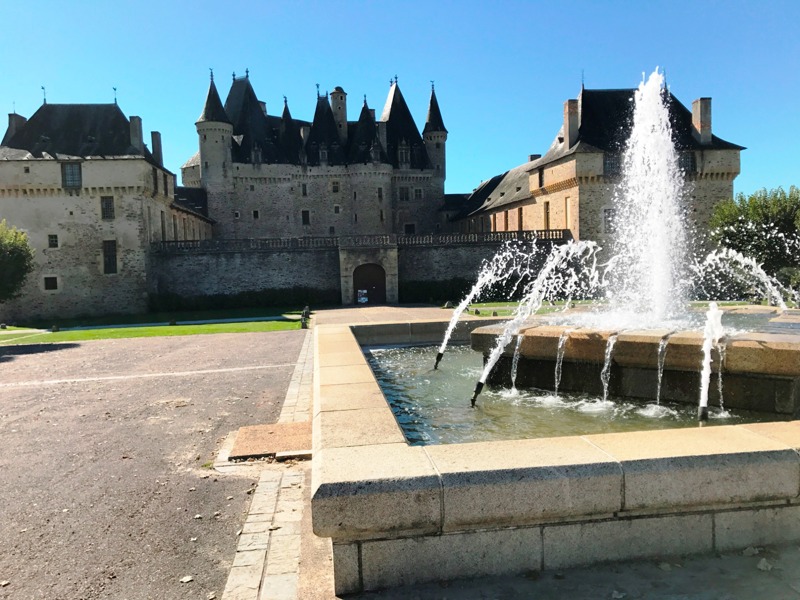
Guests come back and talk about Jumilhac, and it is usually the roof they mention first. Antoine Chapelle, the first Count of Jumilhac, had it dressed in lead and ironwork figures in 1597, allegorical shapes crowded along the ridges in a way you will not find anywhere else in France.
Inside there is a story that stays with people. The Chambre de la Fileuse, the Spinner's room, is where a wife of the house was confined for thirty years, spinning and passing letters to a man outside hidden in her sewing bobbins. Her frescoes are still on the walls. Beyond it are seventeenth-century state rooms and a climb to the old watchtower for a view down the gorges of the Isle. The terraced gardens follow Le Nôtre's principles and hold a rose garden, a plant maze and a small planetarium.
The reason to plan around Jumilhac rather than simply drop in is the evening visit: candlelit and torchlit from June to September, with music and costume, and dinner on the terraces first in high summer.
Château de Brie: A Family Home You Are Invited Into
Distance: about 25 minutes, at Champagnac-la-Rivière
How long to allow: an hour and a half
Don't miss: the granite staircase vaulting, and the medieval barn in the park
Watch out for: by appointment and on set open days only. Ring or email first
Current dates: chateaudebrie.fr
Brie is the closest thing in this guide to being asked round for the afternoon. Built in 1484, flamboyant Gothic tipping into early Renaissance, and somebody's house still: a family lives in it all year round and shows you round themselves, which means the rooms are furnished for the simple reason that they are used.
You go up a granite staircase inside the square keep, under vaulting that opens overhead like a palm, then through the medieval dining room and a run of period rooms finishing in a Napoleon III salon smothered in stucco that comes as a complete surprise. In the park stands a thirteenth-century barn, listed in its own right. Remember that you are in somebody's house.
Château de Puyguilhem: The Loire Château That Ended Up in the Périgord
Distance: about 30 minutes, at Villars on the Brantôme road
How long to allow: an hour and a half, or a full day with the cave
Don't miss: the Hercules fireplace, and the ship's hull roof frame in the top gallery
Watch out for: it closes over the middle of the day, every day, and last admission is well before closing
Current times: chateau-puyguilhem.fr
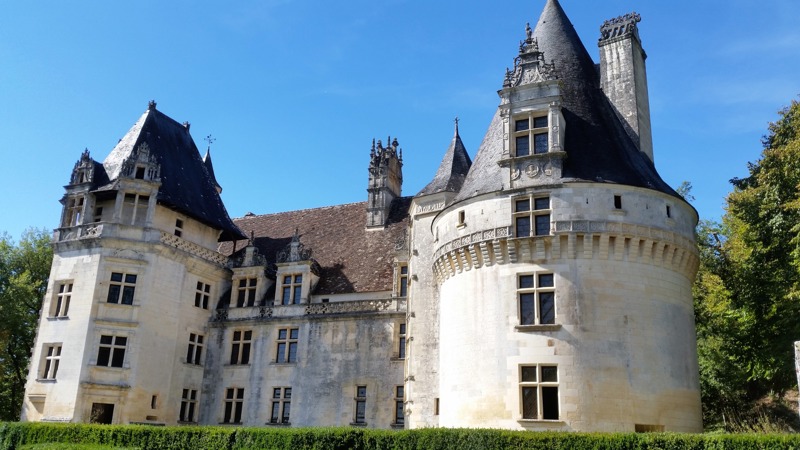
Puyguilhem comes as a surprise: pale stone, mullioned windows, turrets of several shapes, looking far more like the Loire than the Périgord. That is not an accident. It was built between 1514 and 1535 for Mondot de la Marthonie, a man close to the French court who knew the Loire châteaux and wanted one, and the Florentine detail is all over the stonework once you look for it. Two things inside stop people: the great hall fireplace, carved with the twelve labours of Hercules, and the top-floor gallery, where the oak roof frame is built like the hull of an upturned ship.
Villars gives you more than the château if you want a full day. The Grotte de Villars, a few minutes away, holds around thirty original prehistoric paintings roughly nineteen thousand years old, including the little blue horse the cave is known for and one of the very few human figures anywhere in Palaeolithic art. It is thirteen degrees down there all year, so take a jacket.
Château de Rochechouart: A Medieval Castle Full of Contemporary Art
Distance: 37 minutes, 36 km
How long to allow: two hours, plus the meteorite walk in the town
Don't miss: the stag hunt fresco, the Hercules grisaille, and the twisted columns of the courtyard gallery
Watch out for: closed Mondays and Tuesdays, and through the depths of winter
Current times: musee-rochechouart.com
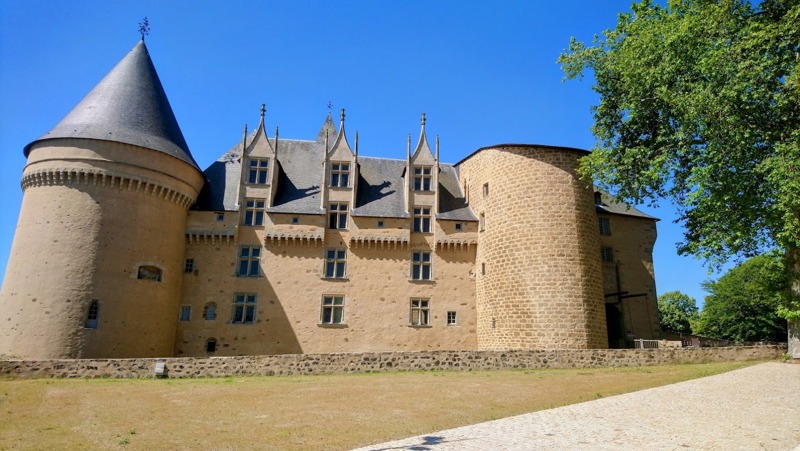
Rochechouart is where we send guests who want a château that does something else entirely. Roughly 210 million years ago, a meteorite hit this spot, leaving a crater among the oldest known on Earth, and the rock it created was later quarried into these walls: the building is made partly out of a meteor strike.
Plundered during the Revolution, and that emptying is exactly what made the next act possible. Since 1985 the château has held the Musée départemental d'art contemporain de la Haute-Vienne, more than thirteen hundred works gathered around landscape, history and imagination, presided over by Raoul Hausmann, a founder of Berlin Dada who took refuge here during the war and never left. The Revolution spared two rooms: an early sixteenth-century stag hunt mural, and a Labours of Hercules in grisaille that will ring a bell if you have already stood at the fireplace in Puyguilhem.
Château de Lastours: A Ruin, and the Best Medieval Day of the Summer
Distance: about 40 minutes, at Rilhac-Lastours
How long to allow: an afternoon, or an evening for the torchlit visits
Don't miss: the medieval camp, with archery, axe throwing and crossbow shooting
Watch out for: the events run on set dates, not continuously. Check before you drive over
Current dates: rilhac-lastours.fr
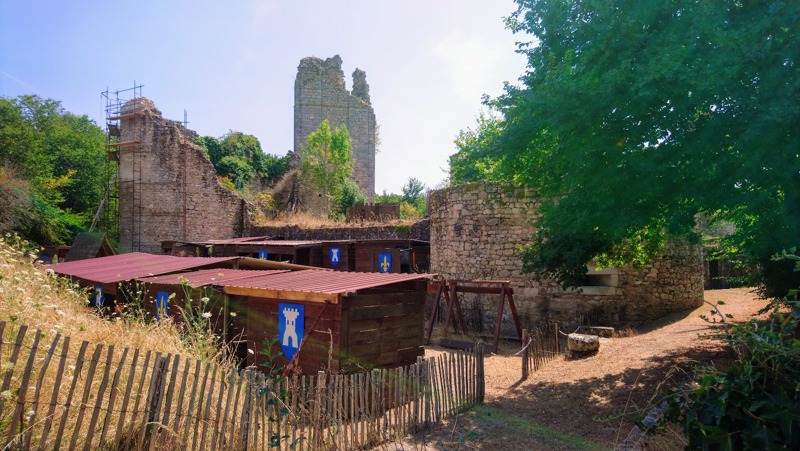
A bare ruin does not usually make much of a day out, which is why one or two castles round here are not in this guide at all. Lastours is the exception, and the reason is the people who look after it. Abandoned and robbed of its stone by the eighteenth century, it had vanished under scrub by 1971, when a small group found it and decided to save it. The Amis de Lastours have since put more than four hundred volunteers through the site, and the work is still going on.
What makes it worth an afternoon is what they do with the place: visits built around mysteries and riddles, a medieval camp pitched in the bailey with weapons laid out to try, torchlit evenings led by characters in costume, and the ruins set alight after dark for the Sainte-Marguerite village festival. Least polished visit in this guide, one of the most memorable.
Château de Bonneval: A Thousand Years, One Family
Distance: 43 minutes, 41 km, at Coussac-Bonneval
How long to allow: an hour and a half
Don't miss: the double drawbridge, the collonaded gallery, and the Pasha of Three Tails' room
Watch out for: no photographs inside
Current dates: chateaudebonneval.com
La Rochefoucauld, further down this list, makes the grandest claim about family continuity of anywhere near us. Bonneval makes a quieter version of the same claim and, to our minds, gives the better visit: smaller and warmer, and you may well be shown round by the Marquis himself. A castle stood on this hill by 930, and the Bonneval family has held it without a break for close to a thousand years. It is square, with heavy round towers and a moat, standing above the red tiled roofs of the village.
Ten rooms and two galleries are open, furnished with Louis XIII and Louis XVI pieces and hung with Aubusson and Fontainebleau tapestries. The room people remember belonged to an eighteenth-century ancestor who left the French army, entered Ottoman service, and ended his life as a pasha, known as the Pasha of Three Tails. Read his story before you go; it is considerably stranger than anything a guidebook will tell you.
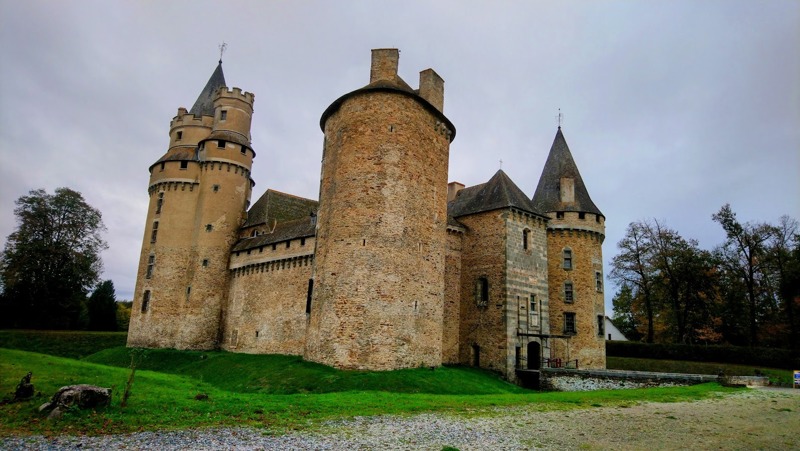
Château de Bourdeilles: Two Châteaux for the Price of One
Distance: about 47 minutes, ten minutes beyond Brantôme
How long to allow: two hours for the château, another half hour for the village
Don't miss: the painted ceilings in the Golden Salon, and Charles V's gilded bed
Watch out for: the hours move about a good deal by season. Park behind the church, a hundred metres from the gate
Current times: chateau-bourdeilles.fr
Bourdeilles is our favourite of the twelve: two separate châteaux standing on the same ground inside one set of walls, one built for war and one built for show, and a single ticket gets you both. The thirteenth-century fortress comes first, its octagonal keep over thirty metres tall; climb it, the view along the river valley is among the best in the Périgord Vert.
The Renaissance palace beside it is why people stay longer than they intended. It was designed by Jacquette de Montbron, widely considered the first woman architect in France, and the story behind it is a good one. Summoned to court in 1587, Jacquette became a favourite of Catherine de Medici, who left her four thousand crowns on her death. That bequest built this palace; Jacquette set aside a room for the queen, who never came, and then the money ran out. The east wing was never built. What you walk through is an unfinished tribute paid for by the woman it was meant to honour, and the painted ceilings, especially in the Golden Salon, are what people photograph. Do not rush that room.
The rest of the interior is remarkable and oddly little publicised: more than seven hundred pieces of furniture, an armoury, and the gilded Spanish bed of the Emperor Charles V. The village below is part of the pleasure and should not be rushed past.
If you want to build a full day around it, Bourdeilles sits ten minutes from Brantôme; we have written that combination up in detail, restaurants included, in our Brantôme guide.
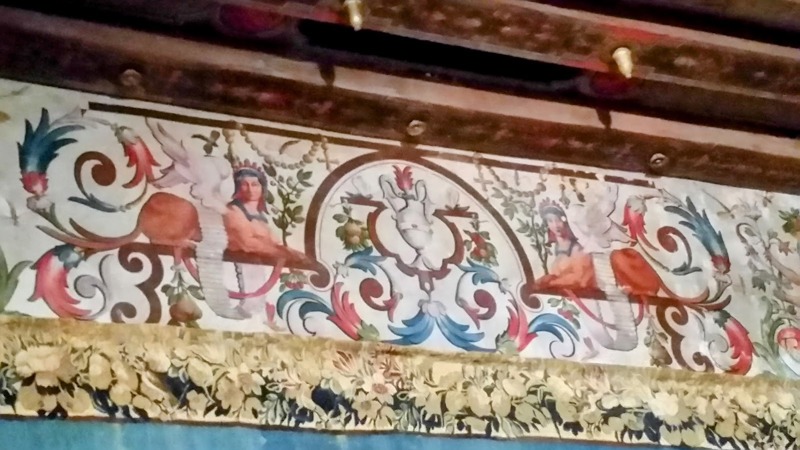
Château de Fayolle: Watch a Château Being Rescued
Distance: about an hour, 62 km, at Tocane-Saint-Apre
How long to allow: an hour and a half, or an evening for a concert or the open-air cinema
Don't miss: the period theatre, the consecrated chapel, and the urbex style tour of the unrestored parts
Watch out for: the programme changes through the season, so check what is running
Current dates: chateau-de-fayolle.com
Fayolle is the newest thing in this guide by a wide margin, and along with Bourdeilles it is our favourite. New owners took it on in 2024 after years shut away, and rather than wait for the restoration to finish, they are showing it exactly as it is, mid-project, with ticket money going straight into the work.
Inside there are reception rooms that once held balls, a period theatre and a consecrated chapel; outside, fifty-five hectares of park with a dovecote. What lifts it above a building site with a ticket desk is the range of visits on offer: a straight historical tour, one led by an actor in character, one in the manner of an urbex explorer through the unrestored parts, and a version they simply call secret. Throughout the summer, there are immersive shows, lit-up concert evenings, and open-air cinema in the park.
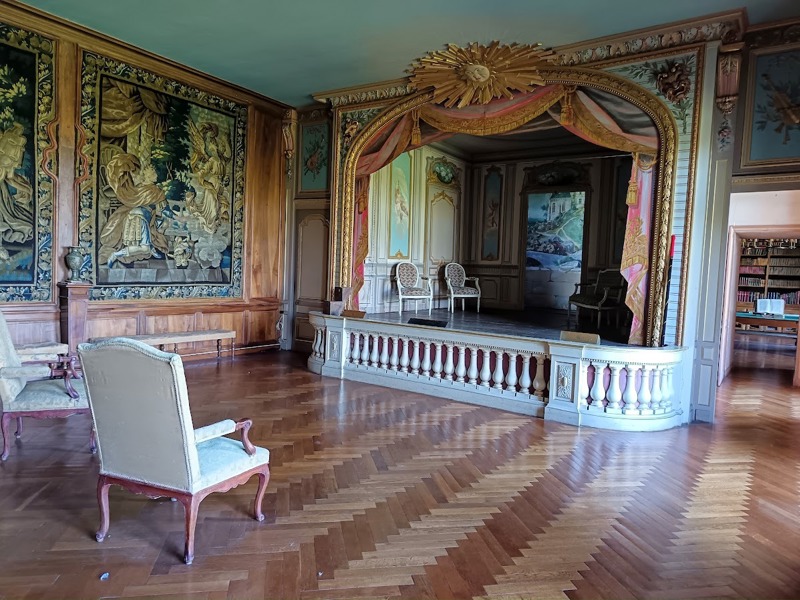
Château de La Rochefoucauld: The Pearl of the Charente
Distance: about an hour, 59 km, and half an hour from Piégut-Pluviers
How long to allow: two hours
Don't miss: the hundred-and-eight-step Renaissance staircase, and the libraries
Watch out for: closed on Tuesdays, and shut for several weeks in midwinter
Current times: chateau-la-rochefoucauld.com
This one is a Wednesday, and the pairing is close to perfect: Piégut-Pluviers has one of the best markets in the region, and half an hour west takes you into the Charente to a château most Dordogne visitors never think to cross the border for. It is known as the Pearl of the Charente, and it deserves the title. The same family has held it for over a thousand years, one of only five in France that can claim that kind of continuity.
What was built around the eleventh-century keep in the 1520s is the reason to come: a Renaissance courtyard modelled on the Villa Farnese in Italy, and a hundred and eight steps of sixteenth-century staircase. The libraries hold something in the region of twenty thousand volumes. The family are said to descend from the fairy Mélusine, whose ghost is supposed to walk the walls, told by the guides with a completely straight face.
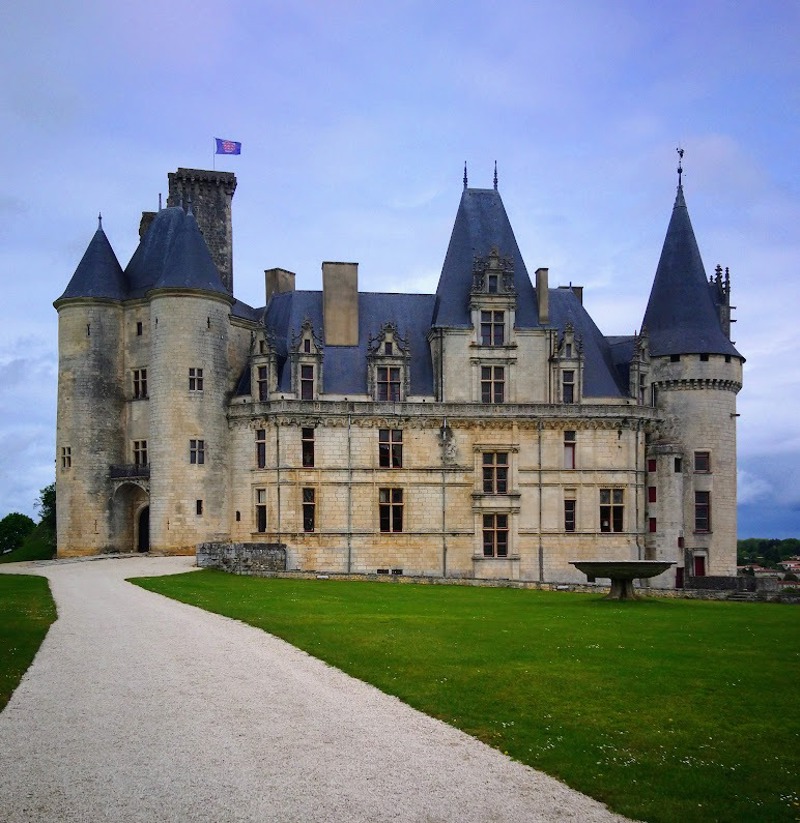
Château de Hautefort: Save the Best for Last
Distance: about an hour, 55 km, in the Périgord Noir
How long to allow: two hours minimum, longer if the gardens tempt you
Don't miss: the formal gardens, and the rooms you will recognise from Ever After
Watch out for: the busiest of the twelve in July and August. Go early or late in the day
Also: a proper walk round the English park, not a stroll
Current times: chateau-hautefort.com
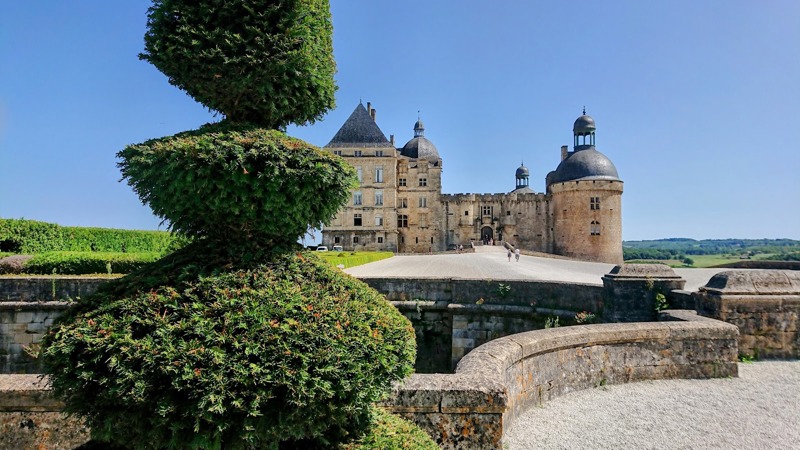
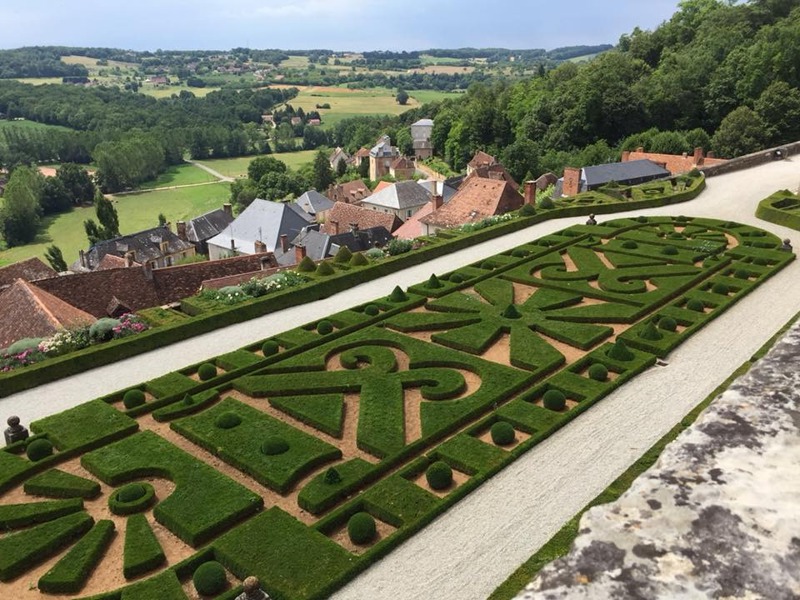
If you only manage one château while you are with us, make it this one. Hautefort does not look like the rest of the Dordogne at all: a broad, symmetrical, unmistakably grand seventeenth-century house, built when the Marquis de Hautefort had the medieval fortress stripped of everything military and turned into a residence fit for the court of Louis XIV he served.
You may find it familiar before you get through the gate. Around fifteen films have been shot here since 1960; Hautefort is the royal palace in Ever After, the 1998 Cinderella film with Drew Barrymore, and the château runs an exhibition on its film history under the title Versailles in the Périgord. A 1968 fire very nearly ended the building, and one of the most effective parts of the visit is a 360-degree reconstruction that puts you inside that night.
Then there are the gardens: three hectares of formal French parterres wrapped around the château, and thirty hectares of English-style park beyond, laid out in the nineteenth century. The views back towards the village are the best photographs of the trip. It is the only one of the twelve that has crossed into the busy Périgord Noir, so you will meet other people here in high summer, but still a fraction of Chenonceau.
One More, and Nothing Like the Others: Château de la Mercerie
Distance: about an hour, 70 km, in the Charente
How long to allow: an hour and a half with the park
Don't miss: the frontage, best seen from a distance, and the azulejos gallery, unique in France
Watch out for: self-guided with QR codes. Guided tours depend on which volunteers are free
Current details: chateaudelamercerie.fr
We have called this a twelve, and it is, but there is one more we cannot leave out. La Mercerie is nothing like anything else in this guide: a twentieth-century folly, built by two brothers who never finished it. They call it the Versailles charentais, and the two-hundred-and-twenty-metre white stone frontage is why; stand well back to take it in.
In 1924 the Réthoré brothers bought a modest manor here and spent the rest of their lives extending it. It was never finished, and after they died the place stood abandoned for thirty years. Since 2011, a volunteer association has been bringing it back. Inside is a gallery of Portuguese azulejos, unique in France; outside, fifty hectares of park planted with rare trees the brothers brought home from their travels. Every ticket goes straight into a restoration that is still very much under way, and the unfinished state is a large part of the interest.
Châteaux en Fête: The Three Weeks When Even the Private Ones Open
Châteaux en Fête runs across the Dordogne for three weeks every spring, from the middle of April into the first days of May. More than a hundred châteaux take part, around seventy of them shut to the public the rest of the year: for three weeks you can walk into private houses and meet the families who live in them, then not get another chance until the following April. It falls in the loveliest and quietest weeks of our year, which we have written about separately. Of the châteaux above, it takes in Jumilhac, Puyguilhem, Bourdeilles, Fayolle and Hautefort. Dates move a little each year; the programme goes up at dordogne-perigord-tourisme.fr
Planning Your Château Visits: What We Tell Our Guests
How many can you fit in? Two or three in a week, and that is what most of our guests do. A château, once you have driven there, walked round and eaten somewhere, takes half a day, and a week here has plenty of competition for those half days: the Wednesday market at Piégut-Pluviers, an afternoon in Brantôme, a long lunch, the fashion museum on site, and a day beside the pool, which is the one most people underestimate. One a day is plenty; pairing them up turns a pleasure into a schedule.
A ready-made route. If you would rather shape a week than pick days at random, the Route Richard Coeur de Lion links the castles caught up in his last campaign. Five of the twelve above sit on it: Jumilhac and Hautefort, both of which he attacked, Brie and Lastours, and Châlus-Chabrol, where he died. Follow it and the week has a story running through it.
Combinations that work. Montbrun, Brie and Châlus-Chabrol sit in the same corner of the Haute-Vienne, and two of the three make a comfortable day. Puyguilhem slots into a Brantôme and Bourdeilles day. Fayolle can be paired with Bourdeilles, though it makes for a long one. La Rochefoucauld belongs to a Wednesday, after the market at Piégut-Pluviers: the single best pairing in this guide. Rochechouart and Lastours are close together and completely different in character. Jumilhac, Bonneval and Hautefort each deserve a day to themselves.
Practical notes. Puyguilhem, like several others, shuts over the French lunch hour; go early and be out by lunch, or eat first. Small private châteaux often do not take cards, so carry some cash; two are open by appointment only, so ring first. The candlelit Tuesdays at Jumilhac and the terrace dinners in high summer need booking, as do the evening events at Lastours and Fayolle. There is a cool box in the gîte and somewhere nearby worth a picnic at every one of these places; the park at Hautefort is made for it.
We have not given opening times here, because they move with the season and sometimes the weather, and nothing is more annoying than driving an hour on the strength of an out-of-date web page. Each château's own site is linked above, and we keep printed times and phone numbers at the gîte, happy to ring ahead for you.
Your Base for All of It
Twelve châteaux, spanning the tenth century to the nineteenth, all within an hour of the front door, and a private pool to come back to at the end of the day. That combination is why a good number of our guests return, and why we have never run out of things to send people off to see.
And there are more than twelve. We have left several out, simply because a blog has to stop somewhere. Ask us when you are here, and we will tell you which suit the week you have got, and which are worth the drive in the weather you have been given.
Beaux Souvenirs is our adults-only pool gîte in the village of Mialet, in the Périgord Vert. If you would like help building a week around these, we know which suit a hot afternoon, which are best in the morning light, and which are worth timing an evening around.
Check Availability | Contact Us | View Accommodation Details