Driving from the UK to the Dordogne: Where to Break the Journey
We’ve done this drive ourselves only twice, and both times the difference between a good day and a long one came down to where we stopped, not how early we left. Guests tell us the same when they arrive at Beaux Souvenirs in Mialet, in the northern Dordogne roughly an hour above Sarlat-la-Canéda: the single overnight on the way down shapes the whole journey more than anything else. Almost everyone breaks the drive somewhere in the Loire, so the real question isn’t whether to pause; it’s where. Choose well, and the same overnight that suits anyone heading further south also saves you the best part of two hours the next day, since our roads stay wider and faster for longer than the route on to Sarlat.
Crossing the Channel
Most guests driving down cross at Calais, either by Eurotunnel or on the Dover to Calais ferry.
Eurotunnel (Folkestone to Calais): 35 minutes, up to four departures an hour, no queuing on deck, and far less likely to be delayed by bad weather than a ferry. The trade-off is a 1.85m height limit and higher peak-time prices.
Dover to Calais ferry (DFDS or P&O): around 90 minutes at sea, up to 30 sailings a day, usually the cheapest crossing and no height restriction. Rough weather can mean delays or cancellations, and it’s worth bearing seasickness in mind if that’s a concern for anyone travelling with you.
Plenty of our guests arrive via the western ferries instead: Portsmouth to Caen, Cherbourg or St Malo. If that’s your crossing, Caen alone is under five and a half hours to Mialet, and the two routes below won’t apply to your journey, so head straight to our Location page for the full port-by-port breakdown. Everything from here is aimed at anyone landing at Calais, where breaking the drive actually matters.
If you’re travelling without a car, we cover Eurostar to Paris and on by train to Limoges in detail on the same page.
Two Routes South: Via Rouen or Via Orléans
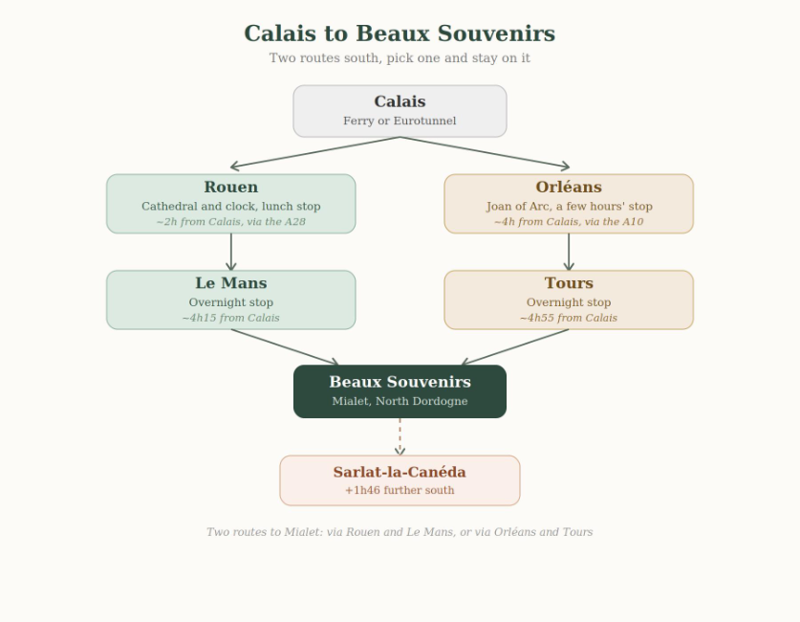
Once you’re past Calais, there are really two routes, not four separate stops to mix and match. Rouen sits on the A28, which carries on south to Le Mans. Orléans sits on the A10, reached by a different road entirely, which carries on to Tours. Pick one route and stay on it, rather than trying to combine a stop from each.
Via Rouen and Le Mans
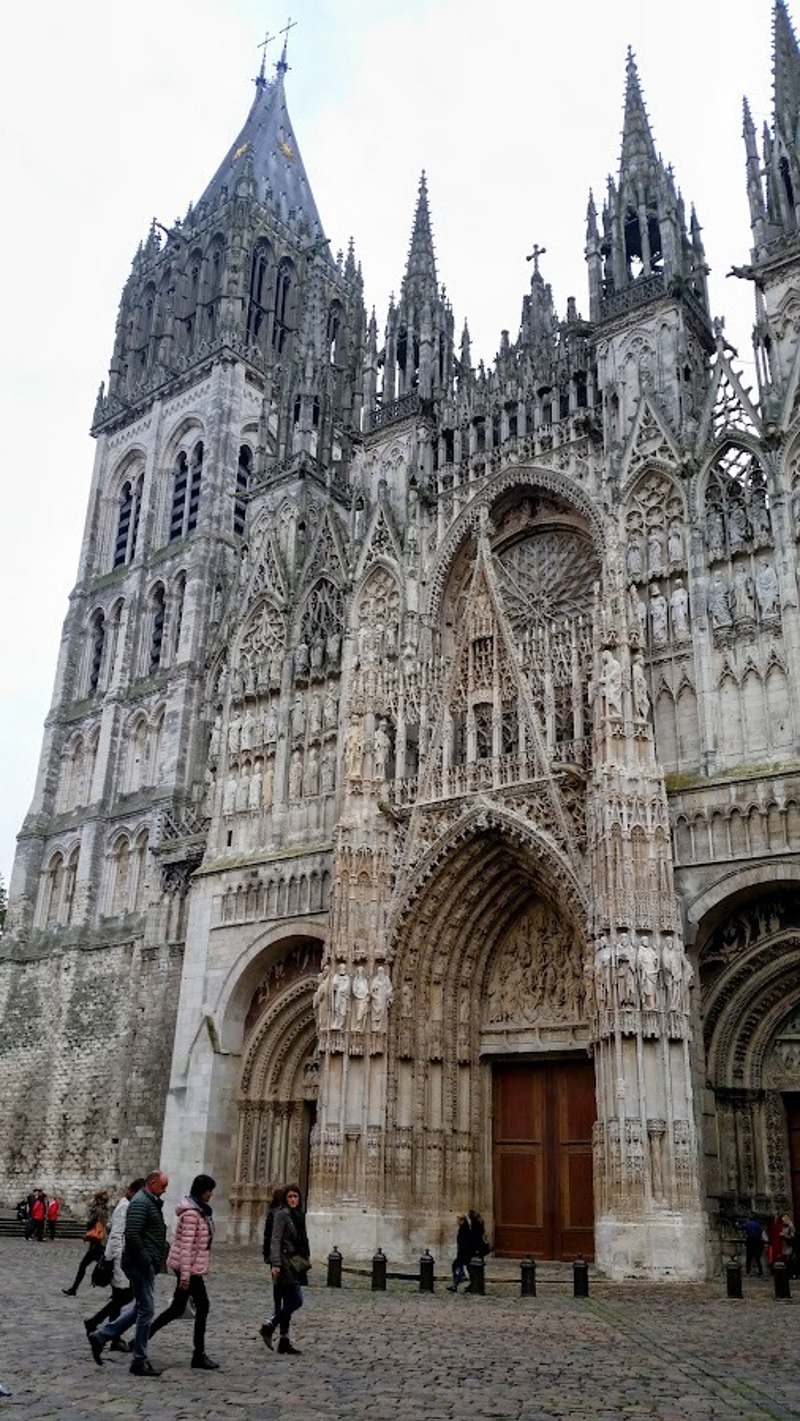
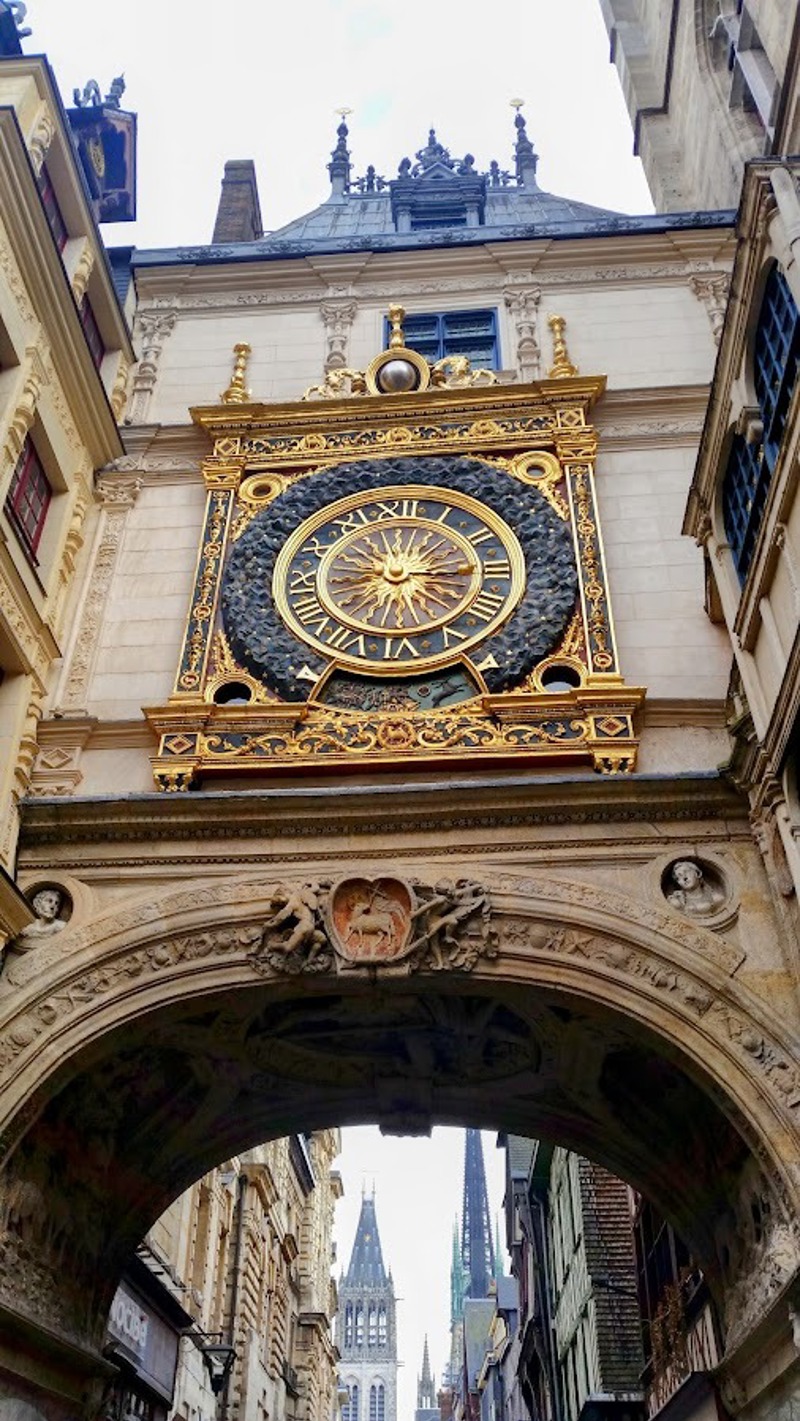
Rouen sits close enough to Calais to work as a late-morning or lunchtime break, about two hours in. Allow half a day if you want to see everything, though the Cathedral and the clock alone take under two hours. Park at one of the riverside car parks near the Seine rather than trying the old town streets, then walk in. The Cathedral, painted more than thirty times by Monet, holds the heart of Richard the Lionheart, who died at Châlus, twenty minutes from Beaux Souvenirs itself. The Gros-Horloge, a fourteenth century astronomical clock, sits a short walk away, and the square where Joan of Arc was executed in 1431 is close by. Chocolaterie Auzou sells Larmes de Jeanne, roasted almonds in chocolate and cocoa powder, and a plate of cheese with cider makes a satisfying lunch before getting back on the road.
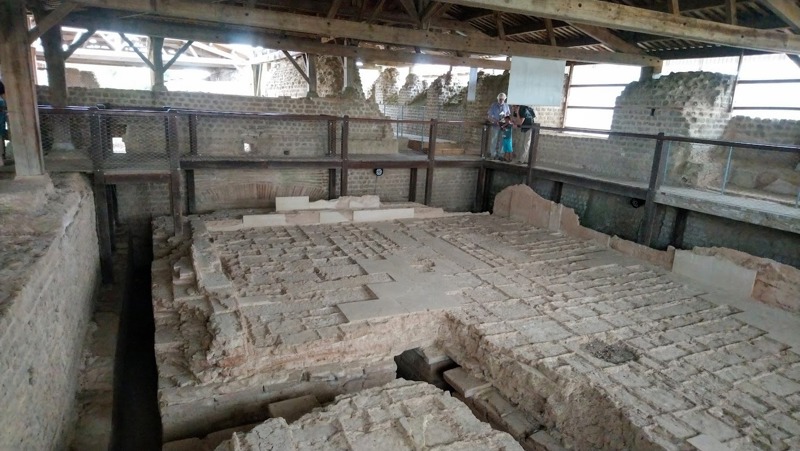
From Rouen, the A28 carries straight on to Le Mans, around 4h15 from Calais in total and a sensible place to stop for the night. Le Mans suits motor racing fans and Roman history lovers alike. It’s world-famous for the 24 Hours of Le Mans, run at the Bugatti Circuit since 1923, and the museum earns the detour. The city’s Roman walls rank among the best preserved in Europe, and 3 hours 35 minutes south of Le Mans, on the way to us, lies Chassenon, home to Cassinomagus, the finest Roman baths in Europe.
Via Orléans and Tours
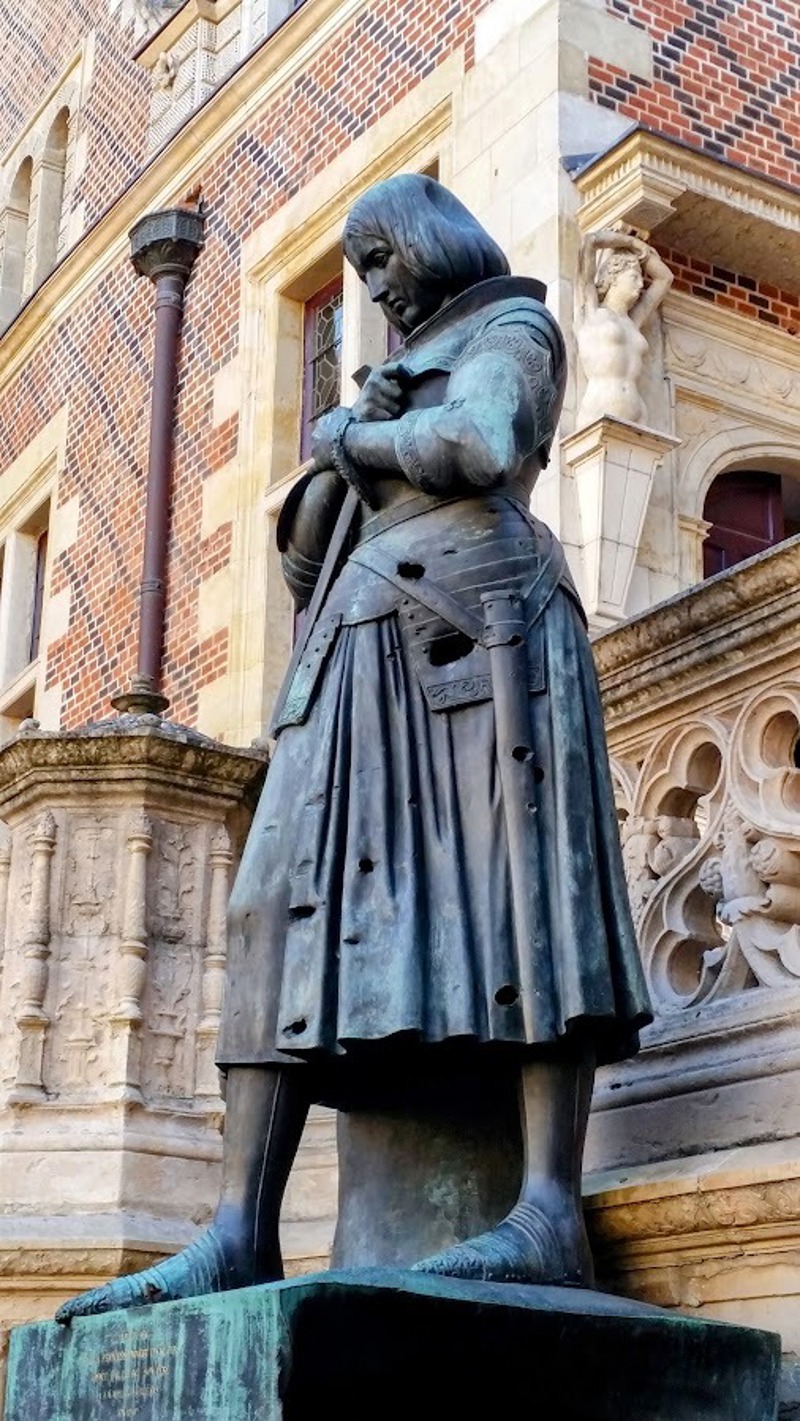
Orléans sits on the A10 rather than the A28, so it’s a different route from Rouen, not a further stop along the same one. It carries the other half of Joan of Arc’s story: she led the seven-month siege of the city in 1429, two years before her execution in Rouen, so the two towns frame her story at either end of the drive south, whichever route you take. Much of the historic centre was lost to the same wartime bombing that damaged Rouen, which is why Orléans suits an hour or two rather than an overnight. The Maison de Jeanne d’Arc, the house where she stayed, is a faithful reconstruction, not the original. Give it enough time for the cathedral, a stroll through the old quarter, and a look at the small mosaic tiles set into buildings to mark street names, a detail easy to miss unless you know to look for it.
From Orléans, the A10 continues to Tours, about 4h55 from Calais, and is an easy place to stop for the night. It’s known as the gateway to the Loire Valley châteaux. Find a table on a shaded terrace for an evening with a glass of local wine and a plate of rillettes de Tours, the coarse, slow-cooked pork the region built its reputation on (Le Mans, on the other route, has its own version, rillettes du Mans, and our own village butcher in Mialet makes one just as good, closer to home). The Basilique Saint-Martin, built over the tomb of Saint Martin of Tours, one of France’s patron saints, rewards a short visit if you have time. The Cathédrale Saint-Gatien is the city’s other landmark, flamboyant Gothic, dedicated to Saint Gatien rather than Saint Martin.
The Final Leg to Mialet
From Le Mans or Tours, the run south to us takes just over four hours, mostly motorway. Push on to Sarlat instead, and you’ll add around one hour and forty-six minutes to the journey. Stop north, and you could be by the pool with a cold drink in hand while guests who carried on are still behind the wheel.
Map
Make the Journey Part of the Holiday
Wherever you break the journey, we’d like it to feel like part of the holiday, not the price of getting here. Whichever route you take, you’re passing through a piece of the same story: Joan of Arc’s fight began at Orléans in 1429 and ended at Rouen in 1431, so the road south carries one chapter of it either way.
Tell us where you stopped when you arrive at Beaux Souvenirs; we like hearing how everyone gets here.
Location | A Walk Around Barrage de Mialet | Check Availability