Brantôme: Everything You Need to Know About the Venice of the Périgord
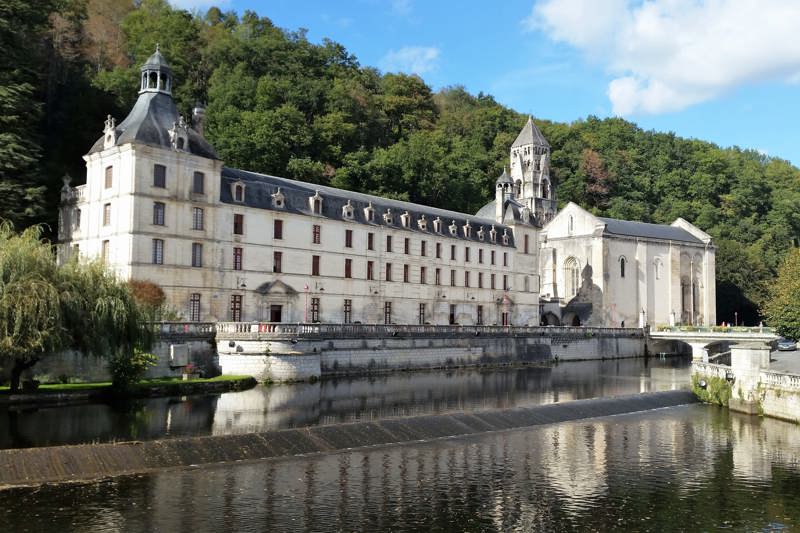
There are places you visit and places that stop you in your tracks. Brantôme is firmly in the second category. Thirty-seven minutes from Beaux Souvenirs, it's one of our most-recommended day trips — and after years of bringing guests here (and returning again and again ourselves), it never fails to surprise us.
Built almost entirely on an island formed by a loop of the River Dronne, flanked by ancient stone quays and the soaring cliffs of its troglodyte caves, Brantôme has a quality that photographs hint at but don't fully capture. It is genuinely, unexpectedly lovely. The kind of place where you arrive planning two hours and find yourself still there at dusk, ordering a second carafe of wine on a riverside terrace and wondering why you hadn't heard of it before.
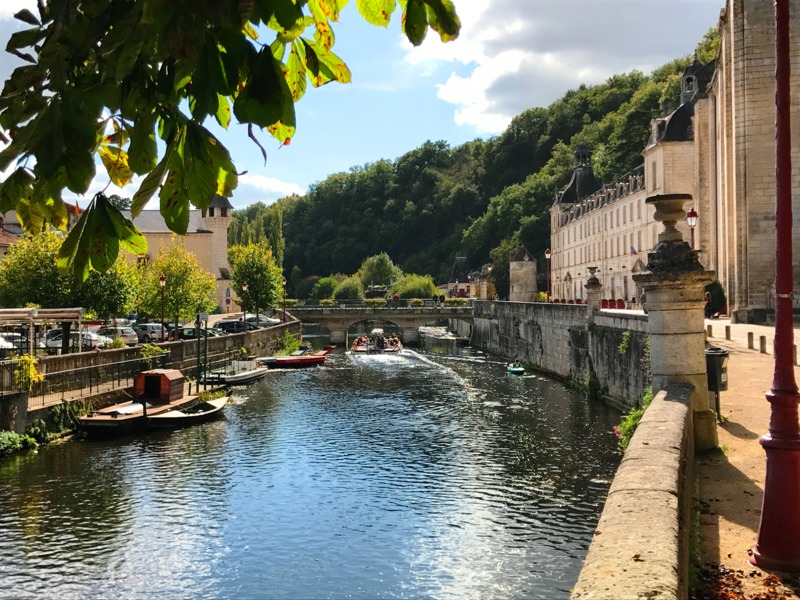
This is our complete guide — everything you need to know to make the most of a day in what the French beautifully call la Venise du Périgord.
Brantôme at a Glance
Distance from Beaux Souvenirs:37 minutes (36km)
Best days to visit: Any day, Wednesday and Saturday are quieter for lingering. On Sunday after 12 noon, the shops are closed.
Markets: Friday market year-round (town centre and riverside) — the liveliest day to visit. Tuesday farmers' market June–September. Truffle market December–February.
How long to allow: Half a day minimum; a full day if you want to combine the abbey caves, the château, a river cruise, and a proper lunch
Parking: Free car parks on the edge of town — the centre is best explored on foot
Don't miss: The Romanesque bell tower, the troglodyte abbey caves, the Château de la Hierce, and — if the occasion calls for it — dinner at Le Moulin de l'Abbaye
Why "The Venice of the Périgord"?
The comparison is instantly obvious the moment you arrive. Brantôme sits on an island — almost completely encircled by the River Dronne — connected to the surrounding town by a series of elegant bridges. Weeping willows trail their fingers into the water. Flat-bottomed boats drift past honey-coloured stone. The reflections of the medieval abbey shimmer in the still river below.
It has that same quality as Venice of making you feel that the water is not incidental to the town but fundamental to it — that without the river, the place would simply be different in character. With it, Brantôme has a dreamlike quality that's hard to shake, even after you've left.
The town sits on the northern edge of the Dordogne department, in the heart of the Périgord Vert — the greenest, most lushly wooded part of the region. That setting matters: the cliffs behind the abbey are draped in vegetation, the riverbanks are thick with willows and poplars, and the countryside around it is the full, rich green that gives this part of France its name.
The Abbey: 1,200 Years of History
The Benedictine Abbey of Brantôme is the town's centrepiece and one of the most remarkable buildings in southwest France. Charlemagne founded it in 769 AD, which means it has been standing, in various forms, for over 1,200 years. That span of time takes a moment to properly absorb.
The abbey was built against and into the cliff face, incorporating the natural limestone caves behind it into its structure. This gives it an unusual, almost organic quality — the boundary between the man-made and the natural is genuinely blurred in places. You'll find chapels carved into the rock, underground passages that connect different parts of the complex, and chambers that have served as everything from monastic cells to wartime shelters over the centuries.
The church itself is beautiful: cool, quiet, and properly ancient in the way that French abbey churches often are. Take a few minutes to sit in it if you can. In the morning, especially, the light comes through the windows at angles that make the stone glow gold.
The Bell Tower
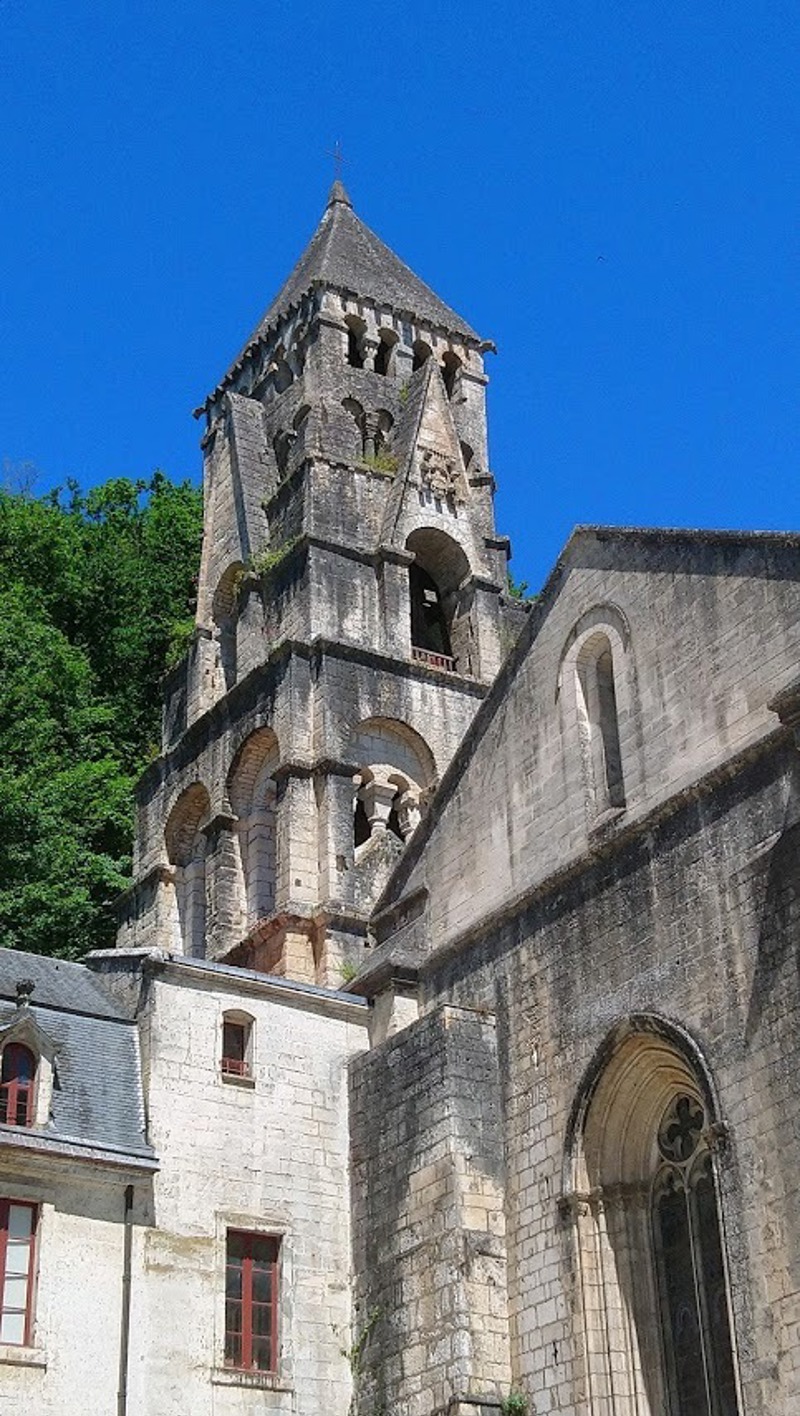
One detail that even many visitors to Brantôme miss: the abbey's bell tower is the oldest in France. It stands slightly separate from the main church building, rising from the cliff face in a series of receding Romanesque tiers. Dating from the 11th century, it predates most of what surrounds it and has a gravity and simplicity that sets it apart. If you stand on the bridge to the south of the abbey and look back, the tower frames the composition perfectly — one of the best photographs you'll take all trip.
The Troglodyte Caves (Grottes de l'Abbaye)
Behind and beneath the abbey, carved into the limestone cliff, are the Grottes de l'Abbaye — and they are far more interesting than most visitors expect.
The caves include a vast hall with a dramatic carved high relief known as the Last Judgement, created by monks in the 16th century. It is astonishing — monumental in scale, strange in its imagery, and preserved with remarkable clarity given its age. There's also a holy spring that the monks believed had miraculous properties, and several chambers that have been used continuously from prehistoric times through to the medieval period.
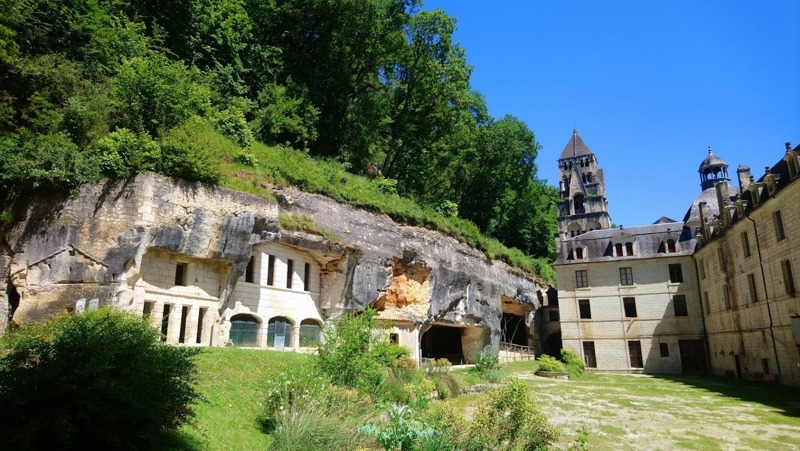
During July and August, the caves open for evening visits with atmospheric lighting — genuinely memorable and worth timing your visit around if you can. Outside peak season, daytime tours run regularly. Admission is modest and includes access to the abbey museum. Allow an hour and a half to do both justice.
The Château de la Hierce
This is the detail that many visitors to Brantôme overlook entirely — and one we always make sure to mention. Open from 2 pm, The Château de la Hierce is a beautiful Renaissance manor built in the 1520s and 1530s, constructed directly onto and into the limestone cliff on the left bank of the Dronne. It is a classified historic monument, and quite unlike anything else in the region. The Dumoulin de la Plante family has lived in and maintained this magnificent 16th-century château for more than a century, and that personal, lived-in quality is precisely what makes a visit so memorable. You may encounter the owner himself at a bend in a corridor, moving through rooms filled with furniture and objects spanning four centuries. The kitchen alone — with its collection of 18th and 19th-century copper pans and period utensils — is a working museum of Périgord domestic life.
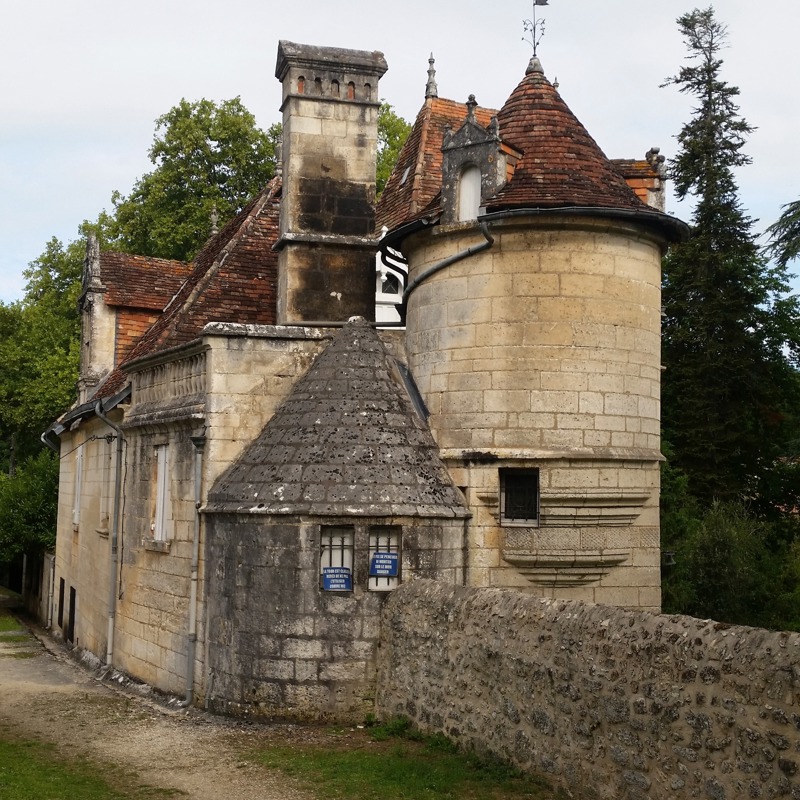
The château is reached from the town centre via a narrow Eiffel-style footbridge across the river — itself a charming detail. Once across, the building gradually reveals itself: a Renaissance residence with a corner turret, mullioned windows, and a loggia interrupted by a circular tower, all built upon caves that served as its foundations. Those caves contain prehistoric paintings, and the grounds have been developed into a botanical garden with several hundred plant species characteristic of the flora of the Dronne valley.
It's the kind of place that feels genuinely discovered rather than visited — and the contrast with the more polished abbey experience makes for a wonderfully varied day.
Walking Brantôme:
The Essential Circuit Brantôme is a small town and is best explored on foot. Everything is within walking distance, and part of the pleasure is simply wandering without a fixed plan. That said, here is the circuit we find ourselves doing almost every time we visit:
Start at the Pont Coudé — the distinctive angled medieval bridge that's one of the town's most photographed landmarks. Cross onto the island and turn left along the riverbank towards the abbey.
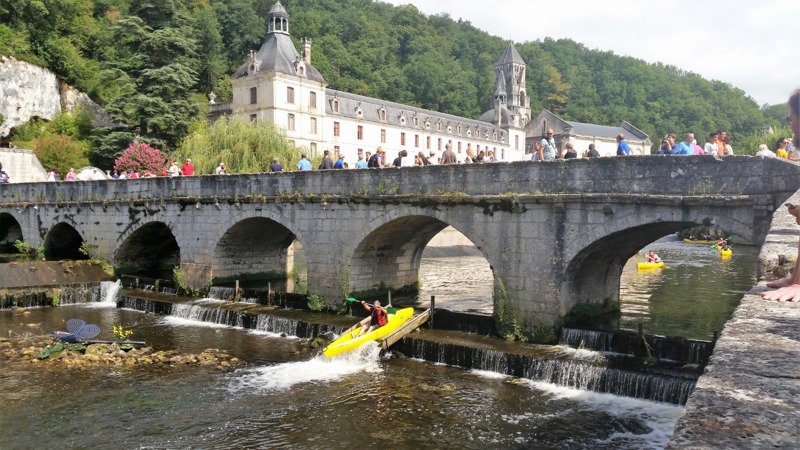
Walk the abbey's river frontage — the view from the south bank, looking back at the abbey reflected in the still morning water, is one of the finest in the entire Dordogne. Take your time here.
Visit the abbey and caves. Allow 60-90 minutes.
Cross to the left bank via the Eiffel footbridge to visit the Château de la Hierce. Allow 45-60 minutes, longer if you find yourself drawn into a conversation about the family history.
Walk the cliff-side path — a narrow, peaceful route that takes you past cave openings and old watermills, with the river below and the wooded cliff above. In spring, this path is alive with wildflowers.
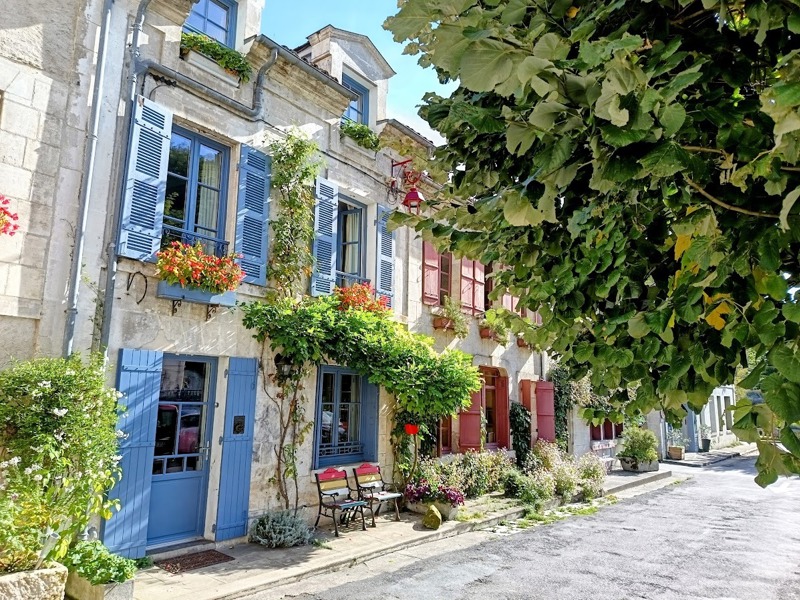
Wander back through the town centre — narrow streets of medieval and Renaissance townhouses, small squares with fountains, independent shops selling local produce, antiques, and artisan goods.
End on the riverside terraces for lunch or a long, lazy afternoon drink. The full circuit takes around 3 hours at a gentle pace, not including lunch.
The River: Cruises, Canoes & Flat-Bottomed Boats
The River Dronne is not just a backdrop in Brantôme — it's an activity in itself.
River Cruises: Flat-bottomed boat cruises operate from the town centre during the main season, drifting quietly along the river with commentary on the town's history. The perspective from the water gives you views of the abbey and cliff face that you simply can't get from land — we particularly recommend this for guests who prefer a gentler pace of sightseeing.
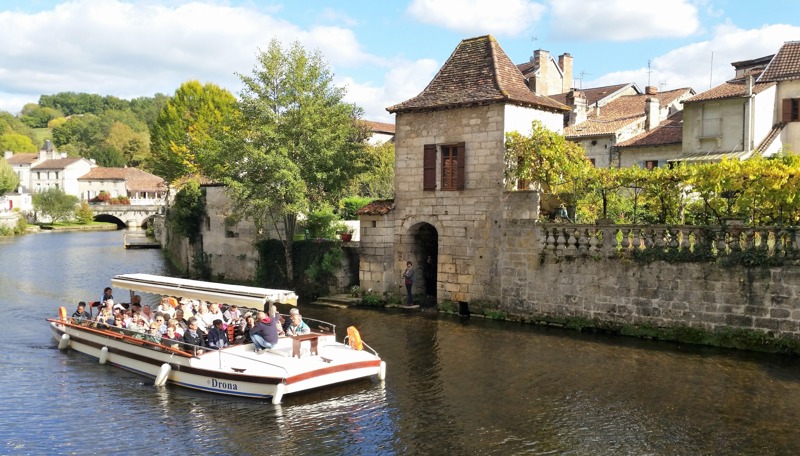
Canoeing, Kayaking and Paddleboarding: For the more active, canoes can be hired for self-guided explorations of the Dronne. The river is calm and very manageable, and paddling upstream past the abbey to find a quiet spot for a picnic is genuinely lovely.
Simply sitting by the water: Never underestimate this option. Find one of the benches along the abbey's river frontage on a warm spring morning, watch the water, listen to the birds, and do precisely nothing for an hour. Brantôme is very good for this.
Gardens: Three Very Different Escapes
Brantôme actually offers three quite distinct garden experiences — worth knowing about before you visit, so you can choose what suits your day.
The Jardin des Moines sits directly within the monastic complex, on the banks of the Dronne alongside the famous Pont Coudé bridge — both forming part of the same 16th-century Renaissance ensemble and considered among the jewels of the Périgord Vert. The garden was laid out in the 1540s by Pierre de Mareuil, the abbey's commendatory abbot, and is decorated with three Renaissance resting places featuring ornamental motifs inspired by Italy. It's a small, refined space — historically significant rather than expansive — and a lovely spot to pause after the abbey and caves before moving on to the rest of your day. This is also the garden that Le Moulin de l'Abbaye's famous terrace overlooks — so if you're dining there, you'll enjoy it from a particularly privileged angle.
Les Jardins Tranquilles are a different proposition entirely — not in the town centre, but a couple of minutes' drive out on the tourist trail. What awaits is a proper 12-acre riverside arboretum and park, with hundreds of mature trees, herbaceous borders, fountains, and sculptures spread across grounds that have been open to the public for nearly 30 years. There are riverside picnic tables on the banks of the Dronne, a café and tearoom for refreshments, and a genuinely peaceful atmosphere that lives up to the name. Open daily from 1 April to 20 October, noon to 6 pm. Well worth an hour or two if you love gardens or simply want somewhere beautiful and unhurried for an outdoor lunch.
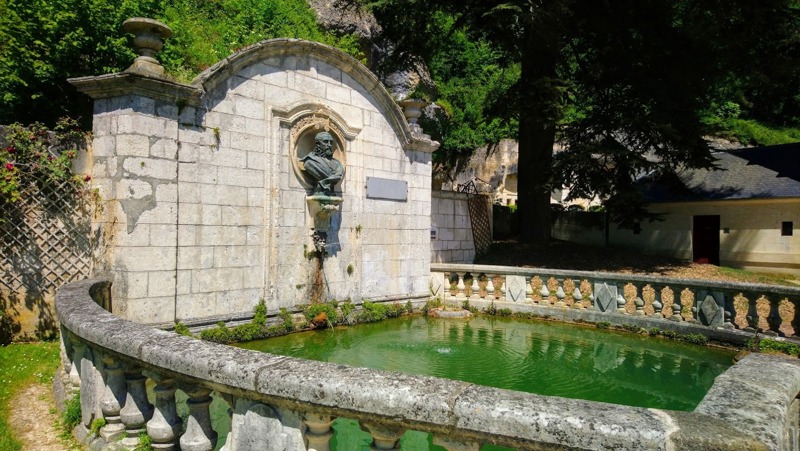
The Jardin Botanique (ALAIJE) is something different again — a unique botanical garden that combines plant collections with social and environmental goals and is maintained entirely without chemicals. You'll find a peat bog, collections of perennial geraniums and salvias, a garden of aromatic and medicinal plants, a toxic plants garden (more fascinating than alarming!), and aquatic plant displays. It's run as a social enterprise and is genuinely one of the more unusual and quietly rewarding things to do in Brantôme — particularly for guests interested in plants, ecology, or simply discovering something off the beaten track.
Where to Eat: From Riverside Brasseries to a Michelin Star
After a morning exploring the abbey, the château, and the river circuit, lunch is very much earned. Brantôme has an excellent range of restaurants for a town of its size — and for guests looking for something genuinely special, it is home to one of the finest tables in the entire Dordogne.
Le Moulin de l'Abbaye — One Michelin Star
Situated at the base of a cliff in Brantôme, Le Moulin de l'Abbaye holds a Michelin star in the 2025 Guide France and enjoys a truly stunning setting, and the location alone would justify the journey. The one-star restaurant welcomes guests for lunch and dinner in an elegant atmosphere, with an incredible view of the river from every table.
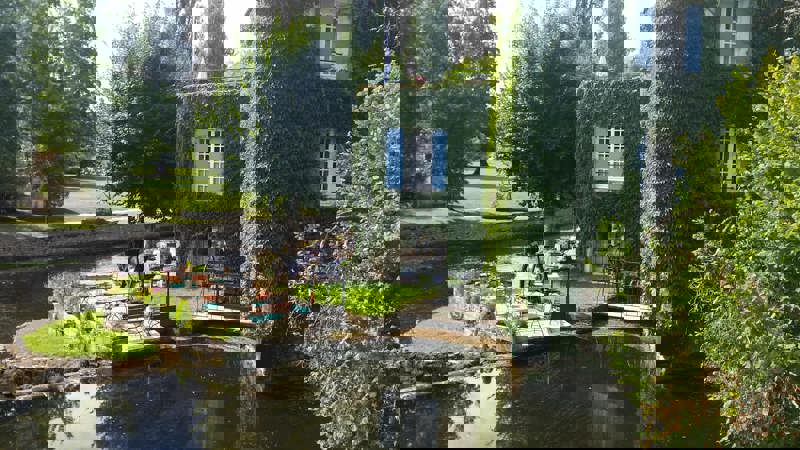
The postcard setting is breathtaking: the Abbey Mill sits along the river, offering panoramic views of Brantôme, the Jardin des Moines, the Pont Coudé bridge, and the abbey founded by Charlemagne in 769. The terrace at the Moulin overhangs the Dronne and, on a warm evening, is one of the most romantically situated dining spots in southwest France.
The chef's fine, flavoursome cuisine is supported by superb ingredients, perfect technique, and meticulous presentation. MICHELIN Guide — classic Périgord ingredients elevated with genuine artistry. The wine list is exceptional, with an emphasis on Bordeaux and regional vintages.
A note on booking: Le Moulin de l'Abbaye is seasonal, typically opening in spring and closing in late autumn. Booking ahead is essential for dinner; lunch can sometimes be more flexible but should still be reserved, particularly in summer. We keep current contact details for our guests at the gîte and are always happy to recommend the right time and occasion for a visit here.
For those who want the Moulin de l'Abbaye experience in a more relaxed register, the same property also runs two riverside bistros — Fil du Temps and Fil de l'Eau — which offer excellent regional cooking in a simpler, more informal setting. Wonderful for a long lunch without the formality of the starred restaurant.
For a Classic French Lunch
Several excellent restaurants along the south bank of the abbey offer traditional menus — proper Périgord cooking, riverside tables, foie gras, duck confit, local cheeses, and walnut tart. The full experience, at very reasonable prices.
For Something Lighter
Several of the squares in the town centre have cafés and crêperies that are excellent for a simpler lunch or a long coffee in the sun. One important tip, whatever you choose to eat and wherever you choose to eat it, have your restaurant decided by around noon. In France, and particularly in this part of the Dordogne, eating at 12.30 is a religion. By the time the church clock strikes the half hour, every seat in every decent restaurant will be taken. The early decision is always the right one.
Museums & Heritage: More Than You Might Expect
Brantôme punches well above its weight when it comes to cultural and heritage attractions beyond the abbey. There are two quite different museums here, each worth knowing about before you visit.
Le Bimbillou Parc: This is one of the most unusual and endearing attractions in the whole of the Périgord Vert — and one that most visitors to Brantôme completely miss. Le Bimbillou Parc is a troglodyte site on the banks of the Dronne, built around the ruins of the original Benedictine monks' mill — the first troglodyte mill in Brantôme. The site includes an unfinished hotel carved into the cliff, a troglodyte house, ancient quarries, and numerous riverside cave chambers, all connected by a self-guided trail with information panels and a site map.
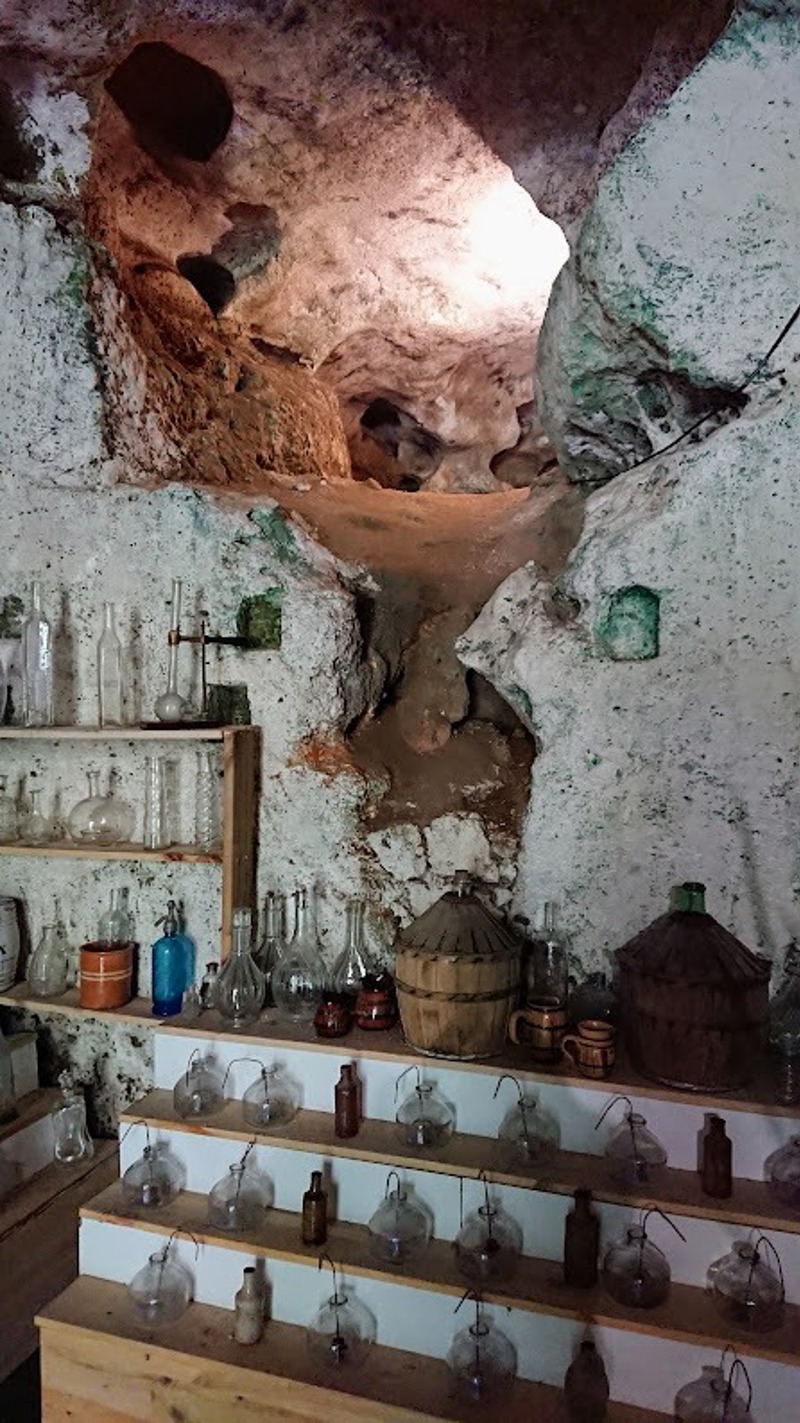
What makes it particularly special is the collection at its heart — tools, equipment, and artefacts of traditional Périgord working life, assembled over nine years by Claude Martinot, who purchased the ruined mill site in 2014 and dedicated himself to restoring it. Sadly, Claude passed away in 2023, but his family have continued his vision, and visiting today feels like both a genuine act of remembrance and a heritage experience. There's also a treasure hunt and traditional wooden games along the route — and a riverside troquet (bar and grill) for refreshments, with evening concerts and themed evenings in high summer.
The Ferdinand Desmoulin Museum was home to Ferdinand Desmoulin, a 19th-century French artist best known for his Symbolist paintings and, unusually, his psychograph drawings — automatic works produced in a trance state that he believed channelled the spiritual world. The small museum dedicated to him houses a collection of both his conventional paintings and these extraordinary automatic works. A slightly eccentric addition to a day in Brantôme, but genuinely fascinating — particularly for guests with an interest in art or the stranger corners of late 19th-century culture. Several of our guests have found it the unexpected highlight of their visit.
Who is Brantome For?
The honest answer is: almost anyone who appreciates beauty, history, and the particular pleasure of a French town that hasn't been over-polished for tourists. But there are certain visitors for whom Brantôme feels almost personally designed.
History lovers will find more here than a single day can comfortably hold — from Charlemagne's abbey and the oldest bell tower in France to the Renaissance Château de la Hierce, the troglodyte caves, and the extraordinary interiors at Bourdeilles just ten minutes further on. Layer upon layer of French history, all within easy walking distance of each other.
Photographers are spoiled at every turn. The abbey reflected in the still morning Dronne, the Pont Coudé at golden hour, the cliff face draped in greenery, the Renaissance façade of the Château de la Hierce glimpsed through the trees from the Eiffel footbridge — Brantôme rewards those who take their time and look carefully.
River enthusiasts and active visitors are particularly well served here. Brantôme Canoë offers a great range of water-based activities on the Dronne — canoes, kayaks, and paddleboards, all available to hire for self-guided exploration of the river at your own pace. Paddling past the abbey, under the Pont Coudé bridge, and out into the quieter stretches of the Dronne beyond the town is a genuinely lovely way to spend a morning or afternoon — and a completely different perspective on Brantôme from anything you'll get on foot. For something a little different, Brantôme Canoë also offers off-road scooter tours through the surrounding Périgord Vert countryside — a fun and increasingly popular way to discover the region's villages, heritage, and landscape without a car. A great option if you fancy combining a little adventure with your sightseeing. Add to this the flat-bottomed river cruises for those who prefer a more relaxed pace on the water, and Brantôme offers more river-based activity than almost anywhere else in the Périgord Vert. The Dronne is not merely a backdrop here — it is very much the point.
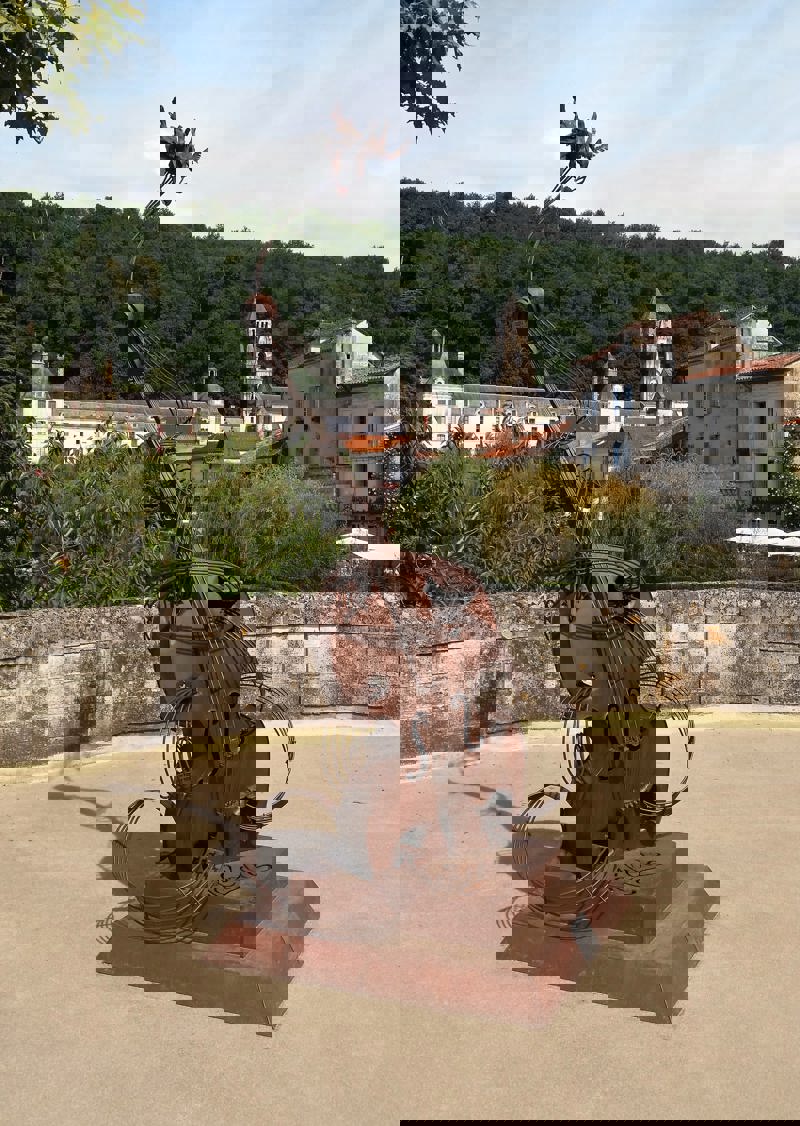
Art and artisan lovers will enjoy the two small streets of independent shops in the town centre, where local artists and craftspeople showcase ceramics, paintings, textiles, and jewellery. It's a lovely town for a leisurely browse, and you're likely to find something genuinely original — a piece of pottery, a small painting, a handmade piece of jewellery — inspired by the Périgord's landscape and traditions rather than mass-produced for the tourist trail. If you're visiting on a Friday morning, the weekly street market adds another layer to the browsing pleasure — local producers, seasonal produce, and the particular atmosphere that only a French market morning can create. A very good reason in itself to plan your visit around a Friday. Remember, though — decide where you're having lunch by noon, browse the shops in the morning, and save the château for the afternoon.
Those simply in search of peace will find that Brantôme rewards unhurried visitors above all others. Sit by the river. Order a coffee. Watch the water. Let the abbey bells mark the hour. There is no rush here — and that, in itself, is rather wonderful.
When to Go
Brantôme is worth visiting in any season, but in our view the sweet spot is April through June and September. The town is fully open, the restaurant terraces are welcoming, the river light is extraordinary, and you'll share it with far fewer people than in peak July and August.
In high summer, Brantôme gets very busy — deservedly so, but the crowds do change the character of the experience. Morning is always the best time to visit, regardless of season: the light on the abbey from the south bridge is at its most dramatic, the streets are quieter, and you have the riverside almost to yourself before the day-trippers arrive.
In October, the town takes on an autumnal quality that's very beautiful — golden light, fewer visitors, and the trees along the river turning. We've walked this circuit in November and found the bare trees and still water almost more striking than in spring.
Planning Your Day from Beaux Souvenirs
Brantôme & Bourdeilles
This is our favourite combination and one we recommend without hesitation. Just ten minutes beyond Brantôme along the River Dronne lies the village of Bourdeilles — and it is, in our view, one of the most rewarding and under-visited stops in the entire Dordogne.
The Château de Bourdeilles is quite simply exceptional. What makes it unique in the region is that you actually get two châteaux for the price of one visit, sitting side by side within the same walled enclosure. The first is a formidable 13th-century medieval fortress, built on a rocky outcrop above the Dronne, with a 35-metre octagonal keep whose walls are nearly two and a half metres thick. Climb to the top, and the views across the village and river valley are spectacular.
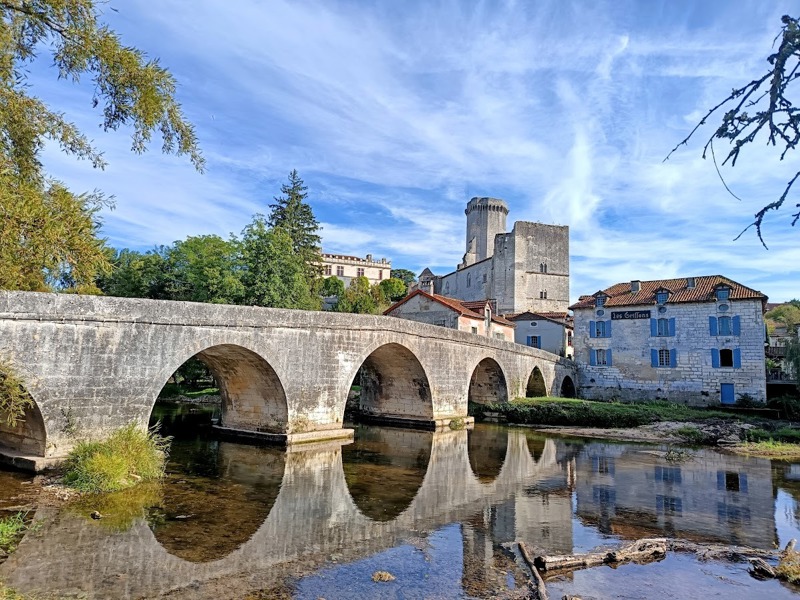
The second is a Renaissance palace built in the late 16th century, and this is where Bourdeilles truly takes your breath away. The Renaissance living quarters were influenced by the Italian Palazzo style, with abundant natural light, richly decorated interiors, and stunning architecture. The palace was conceived by Jacquette de Montbron, the Baroness of Bourdeilles and a favourite lady-in-waiting to Catherine de Medici, widely considered one of the first female architects in western history, and a woman of remarkable vision. The collection of furniture comprises more than 700 pieces and is one of the richest in the Nouvelle-Aquitaine region, spanning the 14th to the 19th centuries. Highlights include the sumptuous Golden Salon with its painted ceiling, the armoury, and the extraordinary Paradise Bed — the gilt Spanish bed of the Emperor Charles V, quite unlike anything you will have seen before.
The village of Bourdeilles itself is a delight — small, unspoiled, and almost entirely without crowds. A handful of stone houses, restaurants, a medieval garden, the river below, and a feeling that time genuinely moves more slowly here. Allow at least two hours for the château and a gentle wander.
Our suggested day: Drive to Bourdeilles first (47 minutes from Beaux Souvenirs), explore the château at a leisurely pace, then drive the ten minutes to Brantôme for lunch — ideally on a riverside terrace — followed by the abbey, caves, and an afternoon wander. It's a long and deeply satisfying day.
Brantôme & Saint-Jean-de-Côle
Head to Saint-Jean-de-Côle first (22 minutes from the gîte), one of France's most beautiful villages, and explore this exquisite port of call at its quietest, then drive on to Brantôme for lunch and the afternoon. In May, this combines two of the finest things in the Périgord Vert: Saint-Jean during the Floralies flower festival and Brantôme at its spring best.
Brantôme & Grotte de Villars
The prehistoric caves at Villars are just 20 minutes from the gîte and 22 minutes from Brantôme — combine a morning at the caves with an afternoon in Brantôme for a day that moves effortlessly from the prehistoric to the medieval.
Brantôme as a Full Day
Abbey, caves, have a shop, then a long lunch — perhaps at Le Moulin de l'Abbaye for a genuinely special occasion. After that, you can take a river cruise or visit the Bimbillou Parc Museum or the Château de la Hierce. Whatever the season, there are a few better ways to spend eight hours in the Dordogne. We always provide our guests at Beaux Souvenirs with detailed maps, current opening hours, and specific restaurant recommendations based on your interests and the time of year. It's the kind of local knowledge that makes the difference between a good day out and a genuinely memorable one.
Festivals & Events
Summer brings Brantôme alive in ways that complement rather than overwhelm its natural character. The town hosts a medieval festival each summer, with costumed performers, jousting displays, traditional markets, and live music that turns the abbey and town square into a genuine theatrical stage. It's atmospheric and genuinely fun — the kind of event that makes the history feel lived-in rather than preserved under glass.
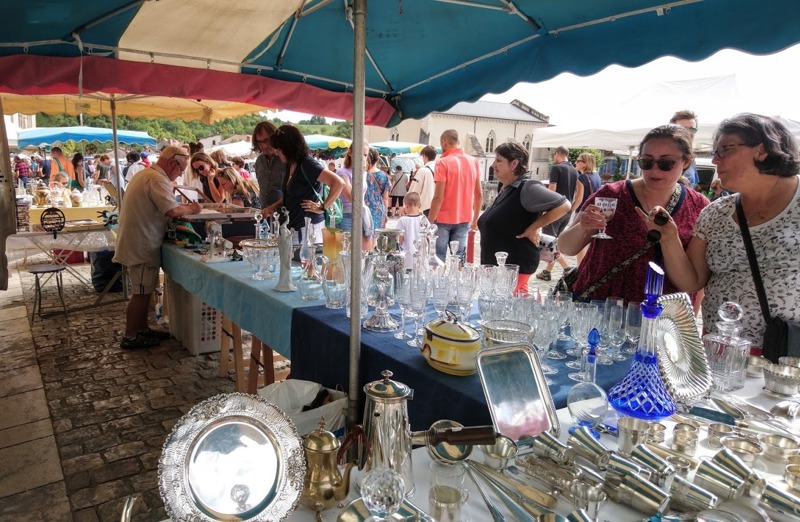
July brings the Festival de Brantôme, when the town hosts concerts and theatrical performances in some of its most spectacular settings. An open-air concert with the abbey as your backdrop is an experience that stays with you. Throughout the season, look out for food festivals celebrating the region's remarkable produce, and the periodic antique fairs and brocantes along the river — always worth timing your visit around if browsing for treasures is your pleasure.
Keep an eye on our Dordogne festivals and events calendar for exact dates during your stay.
Ready to Experience Brantôme for Yourself?
Brantôme is 37 minutes from your door when you stay at Beaux Souvenirs — close enough for an unhurried morning start, far enough to feel like a proper day away. Combined with a private pool to return to, a cold drink by the pool, and the particular contentment of a day very well spent, it's exactly the kind of experience that makes our guests come back year after year.
If you'd like to time your visit to make the most of spring wildflowers, the long golden evenings of early summer, or the quieter beauty of early autumn, we'd love to help you plan it.